Every splash is energy you paid for and got nothing from. Water is 800x denser than air, which means every inefficiency costs you more than you think.
Drag is not one thing. It is four forces working against you simultaneously and they are all connected: Form Drag, Boundary Layer Separation, Active Drag, and Wave Drag. Fix your body position and you address all four at once.
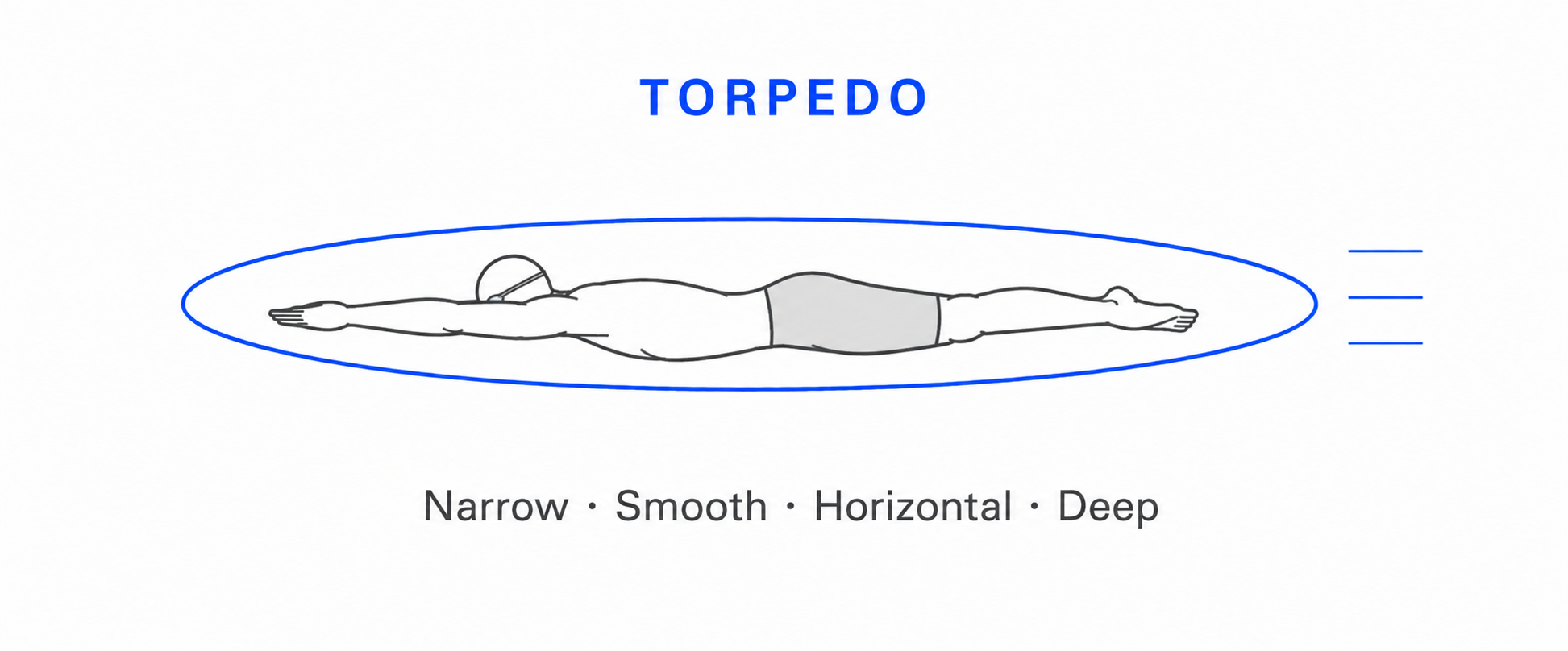
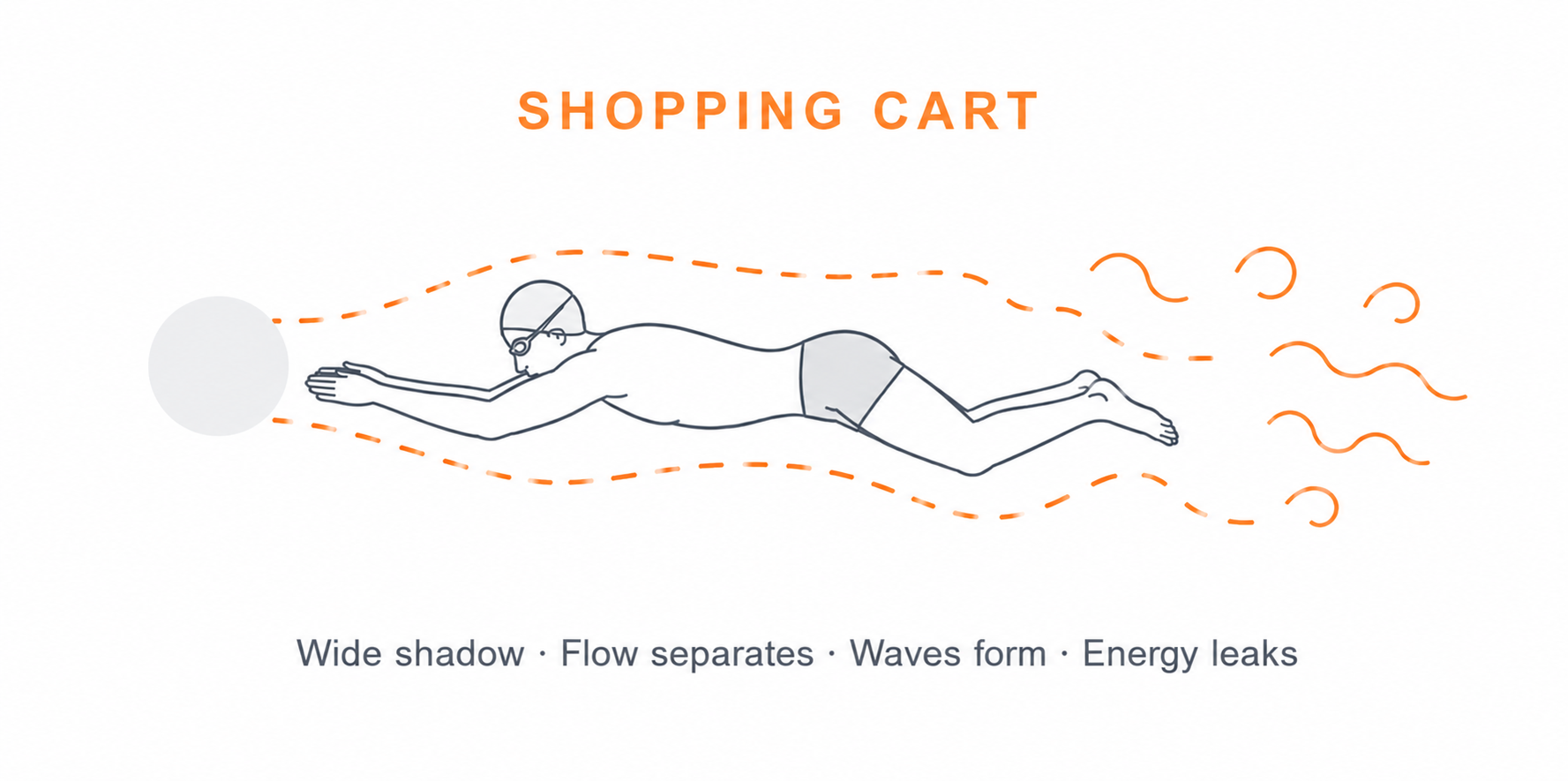
Drag is not the enemy. Poor position is. Fix the position and the drag takes care of itself.
"Torpedo, not shopping cart."
Drag is not one thing. It is four forces working against you simultaneously. Open one card. Focus on that one today. Come back to the others another time.
Open one card. Not all four. Pick the force that matches what you felt in your last swim and focus on that one today.
Your body casts a shadow in the water. The bigger that shadow, the harder water pushes back. A dropped hip or raised head doubles that shadow instantly and you feel it as pure resistance.
Water wants to flow smoothly along your body. When something disrupts that — a jutting elbow, a collapsing core, a wide kick — the flow detaches and creates turbulent pockets of resistance behind you.
Passive drag is measured towing a rigid body. The moment you start stroking and breathing, the drag picture changes completely. Every arm recovery, every breath, every kick cycle compounds the resistance.
Every wave your body makes at the surface costs energy that never comes back as forward motion. Head position is the primary culprit. Looking forward creates a bow wave that lifts your front and sinks your hips.
Poor position creates a bigger frontal shadow, which causes flow to separate earlier, which creates more waves at the surface, all of which compounds as active drag. These are not four problems. They are one system.
You cannot fix all four forces at once. Fix body position first. The other three will follow.
"One force. One length. Notice it."
Two tools you can use at the pool today. One is a drill. One is a diagnostic. Both work because they make drag visible before you have to think about it.
Swim one length making as little noise and splash as possible.
Your body will instinctively lower the head, tighten the kick, clean up the entry, and engage the core. Then you will understand why it worked — because you already felt it.
Tap what you are seeing or hearing to check it off.
The silence drill works because it bypasses thinking. Your body already knows how to reduce drag. The drill just asks it to show you.
"Make no noise. Make no splash."